In 2010, I participated in a workshop on spirulina, which led me to start my first cultivation a few months later.
Technology Development for Plants
In 2013, my mother commissioned me a machine for plants to make music. I finished the decoding unit and the machine arrived in Italy in 2017. In 2022, I added a music box composed of aluminum tubing and seven electromagnets, which allowed the plants to “have a voice.”
Plant-Based Random Generator
In 2017, while analyzing the surface resistance of the plants, I discovered that I was looking at a random generator. The machine produced a random series of results, which varied depending on the plant species and environment. Although it did not decode the “emotions” of the plants, the measurements showed reactions in relation to the surrounding environment and people. Thanks to advances in artificial intelligence and machine learning, I now have the right tools to analyze the biological parameters of plants. Spirulina, being an ancient and simple organism, facilitates the standardization of results. Moreover, its growth in a liquid medium allows collecting parameters without invasive electrodes. Hardware and Software for Research
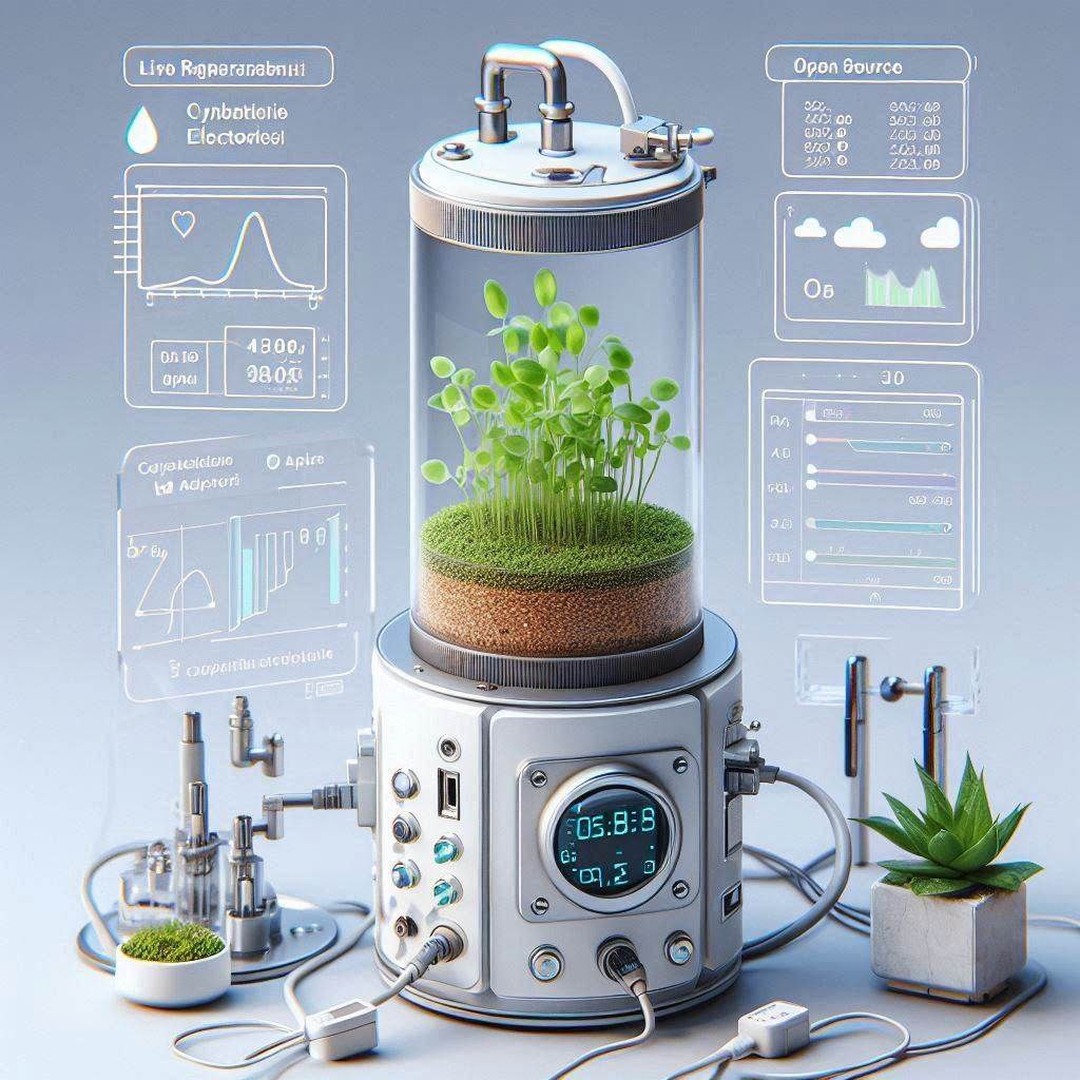
Hardware: A small apparatus containing a culture medium with cyanobacteria and the electronics needed to read variations in vital parameters.
Software: Open source software for live reading, cloud storage and analysis of the relationships between the specimen’s vital parameters and the external environment.
Natural Random Generator
The interest in this line of research lies in the complexity of obtaining a true random order. Computer random generators are pseudorandom and lack the accuracy of natural random order.
Interpretation of Plant Language
Understanding the potential of the plant world and its intelligence could mark a significant turning point in the evolution of planet Earth.
In 2010, I participated in a workshop on spirul…
Leave a Reply